What is Scratch?
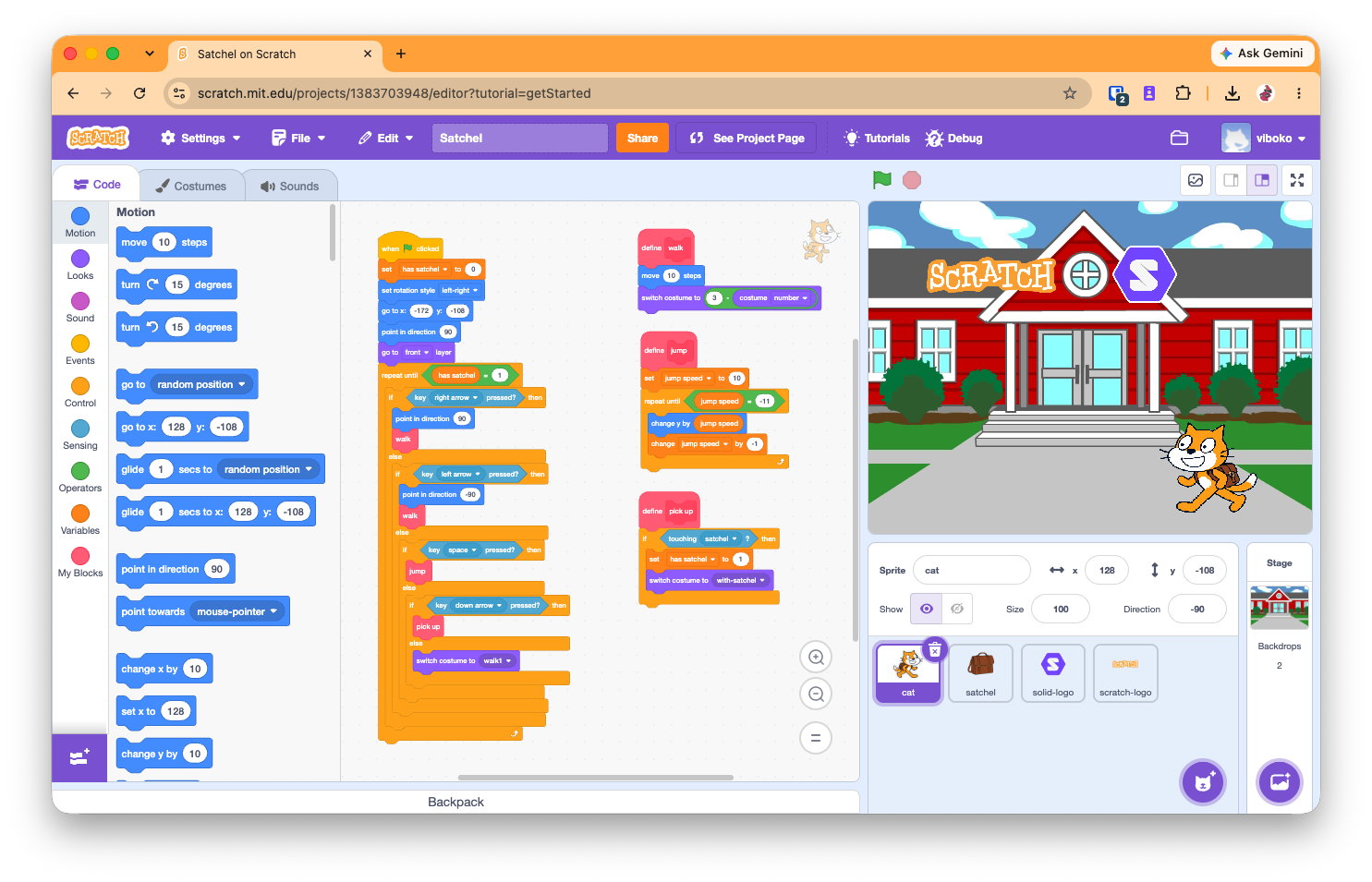
Scratch is a visual, block-based programming language and online community designed for children roughly 8–16, built so that “programming” means snapping together blocks like move 10 steps or when green flag clicked rather than writing text syntax.
when green flag clicked
move (10) steps
It was created at the MIT Media Lab’s Lifelong Kindergarten Group, led by Mitchel Resnick, with the first prototype in 2003 and a public 1.0 release in January 2007. Scratch 2.0 (2013) moved the editor into the browser via Flash; Scratch 3.0 (January 2019) was a full rewrite in JavaScript, dropping the Flash dependency and working on mobile devices. It now has over 100 million registered users worldwide.
In October 2019, Scratch was spun out of MIT into the Scratch Foundation, an independent nonprofit (itself a rename of the earlier Code-to-Learn Foundation), though the Lifelong Kindergarten Group at MIT continues to collaborate on Scratch research. That split matters for how to think about “Scratch” as a system: it isn’t one platform run by one organisation. Scratch 3.0’s code is open source under AGPLv3, and a whole ecosystem hosts and modifies it independently. For example:
- TurboWarp, a popular independent fork with its own runtime and storage backend is the best known;
- ScratchJr is a separate, simpler, offline app for ages 5–7 with no accounts or servers at all.
In addition, many organisations running coding clubs build their own branded editors and materials on top of the same open-source base.
Where Scratch accounts fall short
-
Portability: A child’s “Scratch account” today is really an account on whichever specific deployment their club, school, or platform happened to run that session — and each of those accounts, and the projects stored in them, are separate.
-
Permissions: The storage and permission model on the flagship
scratch.mit.edusite is simple and works well for what it was built for: a project made in the online editor is private by default, visible only to its creator; the creator can choose to share it, which makes it publicly visible and searchable on the Scratch website (and can later unshare it again). -
Consent: Creating an account at all requires either being 16 or older, or — if younger — a parent or guardian’s email address to grant consent, a bar the Scratch Foundation sets higher than the US’s COPPA threshold of 13, since the platform operates worldwide under a patchwork of different national rules. That consent, though, is a one-time gate at sign-up, not an ongoing or granular mechanism: once granted, the account and everything shared or unshared through it is controlled entirely by whoever holds the login.